
Islas Ballestas Paracas

Ballestas Islands Paracas
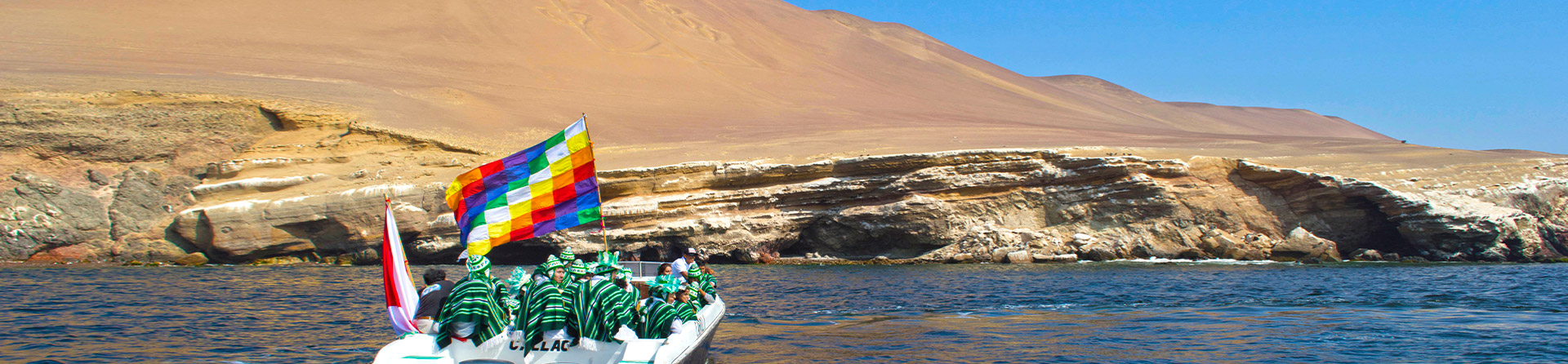
Ballestas Islands is a group of islands near the city of Pisco, in Peru, are composed of rock formations where there is an important marine fauna with guano birds like guanay, the booby and tendril mainly include Ballestas Islands North, central and South each with an estimated 0.12 km² surface.
Ballestas Islands are located half an hour from the coast of Paracas and are located 1 hour from the city of Ica by car plus 30 minutes by boat and 260 kilometers from Lima.
There are colonies of Humboldt penguins (Spheniscus humboldti) that are in danger of extinction. Similarly, the Ballestas Islands are formed in the shelter of two varieties of seals (fur seals and wolves droll) and other mammals.
is also of particular interest when you are near these islands, hearing the cries of wolf packs. It gives the impression of being surrounded by these animals practically 360 degrees. The show is especially unique auditory and unique. These sea lions are harmless.
These islands are accessible from the Paracas, near Pisco, making a circuit that is done by boat, allowing these species to appreciate their environment safely. The full circuit takes about two hours and begins at 7:30 pm. Sailing to the Ballestas islands, along the way you can appreciate the candelabra is a large petroglyph that serves as a beacon to mariners. This geoglifo is related to the Nazca lines and geoglyphs and Pampas de Jumana.
While visiting the Ballestas Islands is from the point of view ecoturístico the best known tour of the Peruvian coast, a few years ago Palomino Islands, in Callao, have become an alternative to visitors who for various reasons, can not get to Paracas.
Ballestas Islands belong to the National Wildlife Refuge System Islands, Islets and Capes (RNSIIPG), administered by the National Service of Protected Natural Areas by the State (SERNANP). The RNSIIPG was established by Supreme Decree No. 024-2009-MINAM December 31, 2009, it consists of 22 islands and islets and 11 points located guano from the coasts against Piura to Moquegua. 140 has an area of 833.47 hectares and is administered by the National Service of Protected Natural Areas by the State (SERNANP). Objective: To preserve a representative sample of the current ecosystem of Peru (Humboldt) where the South Pacific biogeographic province Temperate Eastern states.